


Samuel Taylor Coleridge
Fancy in Nubibus
To Nature
Work without Hope
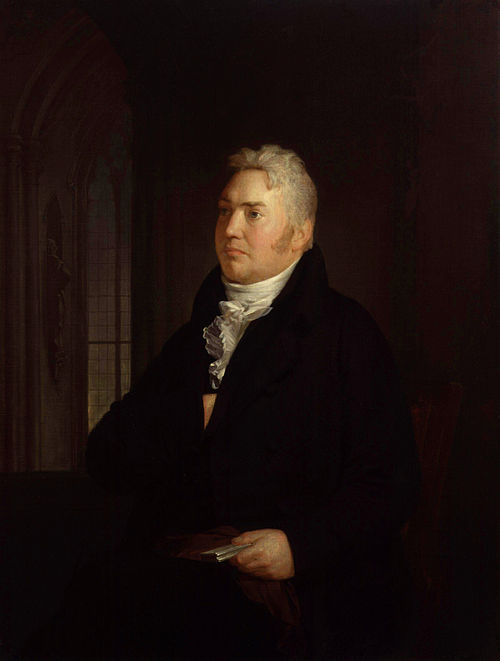
Samuel Taylor Coleridge
This translation was published in the journal Áspera Revista; I thank their staff for their interest in my work.
My studies of metric poetry, which have taken up my last years and blog notes, have led me to focus on one of the most famous and adopted forms: the sonnet. As I explained in my translation of John Dryden’s “Astraea Redux”, my recent efforts have been oriented to working on consonant rhyme. Hence, it seemed natural to devote my next step to the sonnet, a relatively fixed form that appears in various styles, countries and times, and which demands rhyming up to (in some cases, even more) words.
So, I first translated a sonnet cycle by John Donne (published in the literary journal Gambito de papel, with my commentary in English here), and then went on to other Renaissance and Baroque poets (yet unpublished). However, I felt like leaving, at least for a little while, the 16th and 17th centuries (in which I spend most of my time) to try my hand at a less explored epoch. I wished to dabble in the marvellous 19th-century Romanticism, and Samuel Taylor Coleridge (1772-1834) came immediately to my mind: I have read this outstanding English poet more than any of his contemporaries.
From a selection of his poems, I took three sonnets that are quite representative of Romanticism in general. The first, “Fancy in Nubibus”, dates from 1817 and presents an idyllic view of nature. In the midst of contemplation, the poet presents the skies, the earth and the sea, with everything they contain, as a source of inspiration for human fantasy, at once object and source of artistic creation. This poem adopts the Elizabethan sonnet structure, with ABAB-CDCD-EFEF-GG rhyme scheme in iambic pentametres. My translation follows the same pattern, using the Spanish alejandrino to replace the pentametres (as I did in the other two poems).
The second one, “To Nature” (1820), goes further into the topic of nature contemplation, even declaring it divine. The poet’s subjective feelings are also highlighted, in typical Romantic fashion. Regarding form, the first two stanzas follow the Petrarchan rhyme scheme (ABBA-ABBA), but the last six verses comprise an alternating quatrain (CDCD) and a couplet (EE), as in the Elizabethan sonnet.
The third poem, the 1825 “Work without Hope”, corresponds to a later, particularly sombre period for Coleridge, marked by depression, physical ailments, and his opium dependency. Curiously, nature preserves its idealised status, but the poet contrasts the works of natural life with the inactivity of personal apathy and hopelessness, which precludes enjoying even the awe-inspiring contemplations of former times. Formally, this is the most atypical of the three sonnets. It is divided into two stanzas containing six and eight verses respectively. The first stanza presents the rhyme scheme ABABBB, while the second includes four couplets (CCDDEEFF).
Fantasía in nubibus
¡Ah! Qué agradable es, con corazón en paz,
bajo un cielo de ocaso o a la luz de la luna,
ver en la nube inquieta lo que te guste más
o que el maleable ojo adquiera cada una
de las formas curiosas que un amigo ha moldeado
dentro en su fantasía; con cabeza inclinada
y mejilla al soslayo, ver un río dorado
por bancos carmesí; recorrer la collada,
cual viajero, en la Tierra de las Nubes —¡delicia!—;
o escuchando las olas con cerrada visión,
ser ese bardo ciego que en la ribera quicia,
imbuido en luz interna por aquel hondo son,
contempló allí la Ilíada y también la Odisea
surgir con las crecientes voces de la marea.
Fancy in Nubibus
O! it is pleasant with a heart at ease,
Just after sunset, or by moonlight skies,
To make the shifting clouds be what you please,
Or let the easily persuaded eyes
Own each quaint likeness issuing from the mould
Of a friend’s fancy; or with head bent low
And cheek aslant see rivers flow of gold
‘Twixt crimson banks; and then, a traveller, go
From mount to mount through Cloudland, gorgeous land!
Or list’ning to the tide, with closed sight,
Be that blind bard, who on the Chian strand
By those deep sounds possessed with inward light
Beheld the Iliad and Odyssey
Rise to the swelling of the voiceful sea.
A la naturaleza
Puede que sea solo fantasía en verdad
cuando busco obtener de todo lo creado
un gozo hondo, íntimo, en el pecho arraigado;
y saco de las hojas, la flor y su humildad,
sus lecciones de amor y sincera piedad.
¿Qué más da? Aunque el mundo chille de lado a lado,
mofándose de cuanto creo, no me da enfado,
no me da pena, miedo, vana perplejidad.
Así, he de construir mi propio altar campestre
y será el cielo azul mi domo y su ornamento,
y la dulce fragancia de cada flor silvestre
será el incienso dado a Ti en ofrecimiento,
¡a Ti, único Dios!, que bien serás propicio
a mí, tu sacerdote, y un pobre sacrificio.
To Nature
It may indeed be fantasy when I
Essay to draw from all created things
Deep, heartfelt, inward joy that closely clings;
And trace in leaves and flowers that round me lie
Lessons of love and earnest piety.
So let it be; and if the wide world rings
In mock of this belief, it brings
Nor fear, nor grief, nor vain perplexity.
So will I build my altar in the fields,
And the blue sky my fretted dome shall be,
And the sweet fragrance that the wild flower yields
Shall be the incense I will yield to Thee,
Thee only God! and thou shalt not despise
Even me, the priest of this poor sacrifice.
Obrar sin esperanza
Todo parece obrar en la Naturaleza.
Aves y abejas vuelan, la oruga deja el manto;
duerme el Invierno al aire libre y su rostro expresa
sueños de Primavera: ¡lo hacen sonreír tanto!
Yo, lo único que anda sin tarea, entretanto,
ni hago miel ni me junto, ni construyo ni canto.
Mas sé del amaranto que cubre los bajíos,
hallé fuentes de néctar que manan como ríos.
¡Brota, amaranto, brota por quienes te merezcan,
no para mí! ¡Discurran, ricos ríos, y crezcan!
Voy con labios sin brillo, sin laurel en la frente:
¿sabes qué hechizos hacen que mi alma se adormente?
Junta néctar en cribas quien obra y nada espera,
y la esperanza sin un fin jamás prospera.
Work without Hope
All Nature seems at work. Slugs leave their lair—
The bees are stirring—birds are on the wing—
And Winter slumbering in the open air,
Wears on his smiling face a dream of Spring!
And I the while, the sole unbusy thing,
Nor honey make, nor pair, nor build, nor sing.
Yet well I ken the banks where amaranths blow,
Have traced the fount whence streams of nectar flow.
Bloom, O ye amaranths! bloom for whom ye may,
For me ye bloom not! Glide, rich streams, away!
With lips unbrightened, wreathless brow, I stroll:
And would you learn the spells that drowse my soul?
Work without Hope draws nectar in a sieve,
And Hope without an object cannot live.

Leave A Comment