


John Dryden
Astraea Redux (1660)
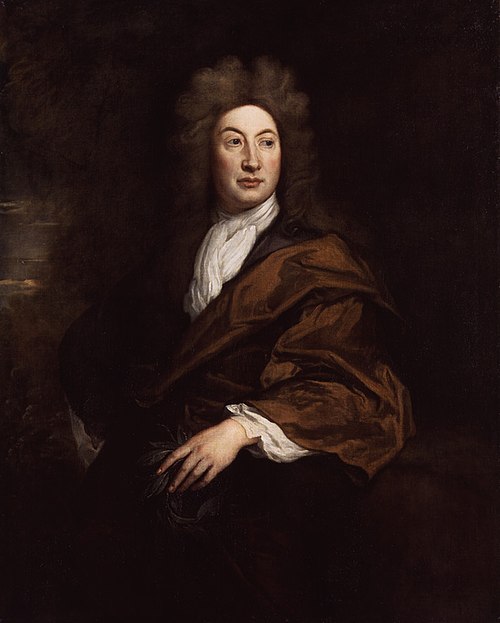
John Dryden
Astraea Redux is one of the most important early works by the famous English poet, playwright, and translator John Dryden (1631-1700). It is an ode composed on the occasion of Charles II’s (1630-1685) coronation as King of England, Scotland, and Ireland in 1660, which marked the beginning of the monarchical Restoration. We should remember that his father, Charles I, had been deposed and executed in 1649, and that, since then and up to Charles II’s ascent, England had a nominally Republican government which did not survive the death of its sole ruler, Oliver Cromwell.
The poem’s Latin title alludes to the return of Astraea, the Greek goddess of justice. In it, Dryden celebrates the return of monarchy and Charles’s enthronement, but he also criticises and “elegantly” distances himself from the Parliamentarian government, despite having published, barely one year before, an elegiac poem, Heroic Stanzas, in honour of Cromwell’s death. In any case, the ode to Charles had a resounding success and cemented Dryden’s fame as a poet, garnering him royal favour. His later career was so prominent that, in 1668, he was named the first Poet Laureate of England, and Restoration literature would later come to be known as the Age of Dryden. Immediately after his death and to this day, he has been considered one of the greatest poets of the English language.
In terms of form, Astraea Redux is written in the pre-eminent English verse, iambic pentameter, and in rhyming couplets, an equally archetypal form of poetry in said language. My translation, however, adopts a different stanza: the sexteto lira (sixain lyre), a six-verse variant of the Spanish stanza known as lira (lit., “lyre”), a quintain of hendecasyllables and heptasyllables with a relatively standardised consonant rhyme scheme: 7A-11B-7A-7B-11B. The sexteto liraadds one verse to the lira, and its composition is more variable; so, in my case, I opted for the following scheme: 7A-11B-7B-11A-7C-11C. Now, why did I choose to translate in a form that is so different from the original? Answering this question calls for some context first.
In truth, this is just one more step in my studies and experiments with metric poetry translation, perhaps the most taxing so far in view of its length and use of consonant rhyme. To begin with, I faced the problem of translating English iambic pentameter into Spanish. In general, the endecasílabo (hendecasyllable) is considered its closest Spanish equivalent, both in terms of their length (in the two cases, the last accented syllable is the tenth) and of their importance in their respective poetic traditions. However, due to the higher prevalence of monosyllables and the greater semantic condensation of English, it is notoriously difficult to preserve the meaningful content of a single pentametric verse in a single Spanish hendecasyllable. (I suggest reading this brief article by Pablo Ingberg for the Hablar de poesía magazine.) For this reason, in many instances the chosen translation metre has been the alejandrino (Spanish alexandrine), also a time-honoured verse in Spanish poetry which, thanks to its greater length (fourteen syllables on average), can make up for the lack of space for content while preserving metric regularity. In fact, my translations of John Donne’s Obsequies to Lord Harington and Elizabeth I of England’sOn Monsieur’s Departure are based on this proposal.
Yet, this solution has not been universally accepted. A few months ago, I assisted to a conference at Universidad del Salvador by Miguel Ángel Montezanti, a great Argentine translator of Shakespeare’s poetic oeuvre (he has published, for instance, two versions of the complete sonnets —one in “classic” Spanish and one in Rioplatense Spanish— and verse translations of Venus and Adonis and The Rape of Lucrece) and of many other early and contemporary poets. On this occasion, professor Montezanti referred, among other topics, to the problem of the English pentameter’s equivalent; he said that, while admitting the difficulties and “losses” entailed by choosing the endecasílabo, he still thought of it as the most organic option in terms of rhythm and euphony, that is, musicality. Furthermore, he argued that the Spanish alexandrine is a heavier-sounding verse than the English iambic pentameter or the Spanish hendecasyllable, owing to its greater length, of course, but also to the mandatory caesura between its heptasyllabic hemistichs. The caesura, existent but not as strict in the pentameter or the hendecasyllable, leads to a middle pause that constitutes a substantive difference between the rhythms of the alejandrino and the two other metres. (I should clarify that, during said conference, professor Montezanti by no means rejected the validity of other opinions, even stating that he too had used the Spanish alexandrines to translate pentameters in poems whose semantic content was too relevant to sacrifice at the expense of rhythm.) Thus, for instance, in his translation of Shakespeare’s The Rape of Lucrece —the first Spanish version that preserves its unique stanza and rhyme scheme—, he used the endecasílabo with remarkable dexterity, achieving a truly admirable poem, even if some elements are lost in the passage from one language to another. In sum, the Spanish hendecasyllable-alexandrine dilemma for translating the English iambic pentameter leaves us with choosing either a closer proximity and affinity with this metre’s formal qualities, or the capability to transfer more precisely the original poem’s content.
This whole discussion, however, takes for granted something we may not have realised, and that is the assumption that a single line should necessarily be translated by a single line. This equivalence may be expected, perhaps, between English and Spanish, given the relative morphological, cultural, and historical closeness of both languages and, in a lesser extent, their poetic systems. But what happens when translating between languages, aesthetic traditions, and poetic systems that are much more unlike? As I explained briefly in my translations of Catullus’s poem 101, and in a previous attempt with the Prophetiae Sibyllarum poems set to music by Orlando di Lasso, the basic rhythmic structures and aesthetic expectations of Ancient Greek and Latin poetics are so different from those of modern English and Spanish that, throughout history, there have existed various ways of translating without the “line by line” assumption (although it has also been attempted).
Some of these alternatives sought not so much an equivalence of formal aspects (for instance, imitating a verse’s length or some stanza’s rhyme scheme) as a functional equivalence between verse and stanzas which, in the translating language, had been traditionally used in a similar vein as the original forms. This could entail, as well, a sort of aesthetic adaptation: the original’s rhythmical and sound characteristics that were irreproducible or too dissimilar could be compensated by others that were considered as expressive or desirable in the translating poetics. A good case is rhyme, a sound effect that was virtually absent in Ancient Greek and Roman poetry, but almost essential in the Spanish Siglo de Oro and the English Renaissance and Baroque poetries.
To name a few examples, we have, in Spanish, Juan de Arjona’s (c. 1560-1630) translation of Roman poet Statius’s (c. 45-c. 96) Thebaid, an epic poem in dactylic hexameters (the metre for epic compositions in Ancient Greco-Roman poetry). Arjona chose the octava real, an eight-hendecasyllable stanza with an A-B-A-B-A-B-C-C rhyme scheme which, besides its Spanish antecedents, had already become established as a form for the epic genre in Italian poetry, whence it came. As an example of the lyrical genre, we may mention Fray Luis de León (1527-1591) and his translations of Horace’s (65 BC-8 AD) poems in liras and sextetos lira. With the same translation criterion, Fray Luis also brought the Book of Job directly from Hebrew to Spanish in interlocked tercets (the terza rima created by Dante Alighieri (1265-1321) for the Divine Comedy).
As regards English, there is the famous example of George Chapman (c. 1559-1634), who translated the Iliad in iambic heptameter and the Odyssey in iambic pentameter, in both cases in rhyming couplets. Dryden himself used iambic pentameter couplets in his English version of Virgil’s (70 BC-19 BC) Aeneid, and in his Horace translations, he employed a combination of iambic tetrameters, pentameters, and alexandrines, also with rhymes.
This short list —deliberately sticking to translations from Dryden’s lifetime or the former century— does not seek to be exhaustive, and even less to prescribe on a unique, “correct” use for this or that poetic form according to genre or theme. It only serves to illustrate a conception of form translation, one I had in mind when trying to find a way out of the impasse of iambic pentameter and Spanish metres before attempting to translate Astraea Redux. What was the answer? A simple equation: if, historically speaking, around the times of this poem; before the same problem (the degree of formal asymmetry) regarding the same poetic heritage (Ancient Greek and Roman works); both English and Spanish translators had resorted to the same techniques; then, this was also possible for translating from English into Spanish. All it took was a comparison of the forms that the English and Spanish traditions would have used to translate the same works from Antiquity, or else, to equate forms that were used for composing original works of the same genre in similar times.
My objective in translating this work by Dryden came to be two-fold: first, exercising in the use of consonant rhyme (which I had hitherto avoided, except for my Catullus 101 versions in Spanish and English sonnets); second, finding an alternative to the alejandrinos in translating iambic pentameters, but without sacrificing, as far as possible, the original’s semantic content. Of course, this presupposed rejecting a one-on-one equivalence between original and translation verses, for the sake of another kind of stanzaic equivalence based on poetic tradition.
Throughout his life, Dryden used rhyming couplets profusely, for example, for his epic translation of the Aeneid, but also in satires, in allegorical works (such as The Hind and the Panther), and in lyrical poems, as is the case with Astraea Redux, often categorised as an ode or panegyric. Hence, my first idea was to use the lira —a stanza which Fray Luis de León (to name just one case) had used in many odes— for each original couplet. To get a grasp of how adequate or comfortable this option would be, I adopted a criterion based on an approximate proportion of syllables.
The criterion was as follows: if, as previously explained, the alejandrino is largely a suitable metre to transmit an iambic pentameter’s semantic content, we may suppose that a desirable proportion to allow for comfortable translation would be close to 14 Spanish syllables (a mean alexandrine verse, although this quantity varies) for every 10 English syllables. According to this criterion, one stanza of the Spanish lira (7+11+7+7+11 = 43) is too wide to translate the 20 syllables of an English couplet (far exceeding the desired 28 to 20 proportion), but at the same time too narrow to accommodate the 40 syllables of two couplets (it should be closer to 56 Spanish syllables). Admittedly, another option would have been not to seek a regular stanzaic equivalence between original and translation, simply translating what the poem “says” in liras (in the vein of Arjona’s Spanish Thebaid, for instance). However, I thought it best to achieve such regularity somehow, in order to preserve, as much as possible, the logical and syntactic self-containment of Dryden’s couplets (a hallmark of his style, by the way). If the lira, with its five verses, had this flaw, what would happen with its six-verse version, the sexteto lira? With the 11 syllables of the extra hendecasyllable, the count would add to 54, coming quite close to the 56-to-40 proportion. This would guarantee an acceptable equivalence of two English couplets for each sextet in my version, a proportion maintained throughout the entire poem, save for a passage in verses 225-229, where Dryden introduced a triplet (the only case in this poem), and the last six verses, where I chose to assign one sextet to each of two three-verse sets to avoid unbalance.
My version, the result of this quite laborious process, is for the readers to judge, as always. One last point I would like to add is that, on a personal level, this work meant facing a challenge and reaching a goal which, not so long ago, I had thought unattainable. I had never dared to translate a poem such as this using a set form with consonant rhymes, simply because I had never believed myself capable of it. My prior explanation —including the references to other translations of mine as previous steps— is only meant to retell how I came to overcome such fear, without considering myself, by the way, to have discovered anything new or walked on untrodden paths. Far from boasting, my intention is that this version of John Dryden’s Astraea Redux, along with its precedent text, whatever their rights and wrongs, will serve to illustrate my firm belief that, in translation, as much as in any art, the basis of growth is effort, study, patience, and admitting one’s own errors. And that —I have no doubts— is within reach of everyone.
Astraea Redux
| Now with a general peace the world was blessed, While ours, a world divided from the rest, A dreadful quiet felt, and worser far Than arms, a sullen interval of war: – – Thus when black clouds draw down the labouring skies, Th’ ambitious Swede like restless billows tossed, And heaven that seemed regardless of our fate, We sighed to hear the fair Iberian bride For his long absence church and state did groan, Youth that with joys had unacquainted been Nor could our nobles hope their bold attempt The vulgar, gulled into rebellion, armed; Thus when the bold Typhoeus scaled the sky, The lesser gods that shared his prosperous state Blind as the Cyclops, and as wild as he, How great were then our Charles his woes, who thus Could taste no sweets of youth’s desired age, His wounds he took like Romans on his breast, That sun which we beheld with cozened eyes But those that ‘gainst stiff gales laveering go These virtues Galba in a stranger sought, For when his early valour heaven had crossed, And viewing monarchs’ secret arts of sway And when restored made his proud neighbours rue Recov’ring hardly what he lost before, To business ripened by digestive thought, Well might the ancient poets then confer In such adversities to sceptres trained, Shocked by a covenanting league’s vast powers, Some lazy ages, lost in sleep and ease, O’er whom Time gently shakes his wings of down Of some black star infecting all the skies, Roused by the lash of his own stubborn tail A bull to thee, Portunus, shall be slain, Yet as wise artists mix their colours so So on us stole our blessed change, while we Do seldom their usurping power withdraw, Heaven would no bargain for its blessings drive, Yet as he knew his blessing’s worth, took care Booth’s forward valour only served to show That by the moon’s mistaken light did rise, The blessed saints that watched this turning scene Thus pencils can by one slight touch restore But when ourselves to action we betake Man’s architect distinctly did ordain ‘Twas not the hasty product of a day, Our healthful food the stomach labours thus, Deaf to complaints, they wait upon the ill And guard with caution that polluted nest Like those that vainly hoped kind heaven would wink So these when their black crimes they went about Like zealous missions they did care pretend Which durst with horses’ hoofs that beat the ground Thus Sforza, cursed with a too fertile brain, Suffered to live, they are like helots set But since reformed by what we did amiss, When once they find their jealousies were vain To fetch that prize by which Batavia made Afflicted Holland to his farewell bring The wavering streamers, flags and standard out, The Naseby now no longer England’s shame, The princely York, himself alone a freight; Heaven could not own a providence and take The winds that never moderation knew, The British Amphitryte smooth and clear And welcome now, great monarch, to your own; The land returns, and in the white it wears By that same mildness which your father’s crown Thus when th’ Almighty would to Moses give Your power to justice doth submit your cause, When through Arabian groves they take their flight, So tears of joy for your returning spilt, Choked up the beach with their still growing store, Preventing still your steps, and making haste (A month that owns an interest in your name: Did once again its potent fires renew, Those clouds that overcast your morn shall fly Abroad your empire shall no limits know, And as old Time his offspring swallowed down, Nor in the farthest east those dangers fear And France that did an exile’s presence fear The discontented now are only they O happy prince, whom heaven hath taught the way By Fate reserved for great Augustus’ throne! |
Ya había sido el mundo con una general paz bendecido; nuestro mundo, escindido del resto, soportaba un tremebundo silencïo que aterra más que las armas: la áspera entreguerra. Así, al congregarse Como una ola abatida El Cielo, de la suerte Suspirando se oía Lloraban por su ausencia La juventud, de gozos No podía esperar se armó el vulgo, engañado, Así, cuando Tifón cada dios subalterno Cual Cíclope cegado ¡Cuán inmensos dolores no había degustado Con un romano celo, Ese sol que observamos Pero el que un ventarrón Estas virtudes Galba Pues habiendo negado Viendo a los soberanos de quien, ya restaurado, recobró con labores con razón digestiva, Sería honra oportuna Su abuelo de renombre hizo frente a una liga En las eras cansinas, Sobre ellas bate alas de un negro astro que al cielo Azuzado a trallazos un toro en sacrificio Pero, así como el listo nuestro cambio contento no depone su brío No hacía con bendiciones Mas diste en revelarlos Booth, de valor atento, que a la luz de la luna Los santos ya benditos El pincel restituye, pero cuando al hacer que asignó el Arquitecto No fue un precipitado Con las comidas sanas, cuidan, sin oír zozobras, o velar en avieso como esos vanidosos así estos preparaban Con misionero celo, que osó, chocando el piso Así Sforza, maldito Su vida toleramos Mas de nuestro error de antes que, al hallar que era vano a llevarse al preciado cuando Holanda, apenada, pendones y estandartes, La Naseby, antes bochorno London, York, magno asaz, No habría providencia Vientos que de mesura La Anfitrita británica, Y ahora ya te avista, Ya la tierra regresa esa moderación, Así, cuando el Altísimo A lo justo procura que, al recorrer volando las lágrimas de gozo para verte y que atesta de ti va por delante (Mes que tiene un porciento volvió a avivar su intensa dispersos, los nublados Afuera, no habrá cota como tragaba el viejo ni en el lejano oriente Francia, que a un exiliado Solo está disgustado ¡Oh, bienaventurado los Hados reservaron |

Leave A Comment